What Is Retail Collaboration Tracking A Simple Guide

You can think of retail collaboration tracking as a system for managing joint activities. It helps you work with partners like suppliers and brands. The main goal is using shared, transparent data to meet mutual objectives. This collaboration improves supply chain efficiency. Effective tracking collaboration relies on accurate data. For instance, in Esl Retail, an ESL Gateway AP sends real-time pricing data to each ESL Price Tag. This ensures alignment. Electronic Shelf Labels are a great example of this data-driven partnership.
Why Is Effective Retail Collaboration Tracking Essential?
Effective retail collaboration tracking moves your partnerships from simple transactions to strategic alliances. You unlock significant advantages when you and your partners work from a single source of truth. This alignment drives growth, efficiency, and stronger relationships across your entire operation.
It Boosts Sales and Profitability
Aligning Promotions for Maximum Impact
You can maximize promotional ROI when you and your suppliers coordinate efforts. Shared data on inventory, sales forecasts, and marketing calendars ensures everyone is prepared. For example, Rouses Markets used a collaborative platform to improve planogram management. This effort reduced redundant layouts by 25% and helped the retailer quickly fix distribution gaps, minimizing lost sales. This kind of effective collaboration turns promotional events into guaranteed revenue drivers.
Ensuring Product Availability at Peak Times
A successful promotion means nothing if the product is not on the shelf. Tracking ensures your supply chain can handle the anticipated sales lift. When partners have visibility into promotional schedules and demand forecasts, they can adjust production and logistics accordingly. This proactive approach keeps popular items in stock, capturing every possible sale.
Many brands have seen significant sales growth by using collaborative retail media platforms to align their efforts.
| Brand/Company | Sales/Profitability Boost |
|---|---|
| Nutline (Intersnack) | 14% in-store sales uplift |
| Neumarkt (Heineken) | 39.51% sales volume uplift |
| Dove (Unilever) | 9% brand share boost in 1 month |
| Matache Măcelaru | 5.4% meat sales increase |
It Improves Inventory Management
Preventing Costly Stockouts
Stockouts are a major source of lost revenue in the retail industry.
The global retail sector loses an estimated $1.75 trillion annually due to out-of-stock products. This figure represents nearly 8.3% of all retail sales.
Collaboration tracking gives you and your suppliers a real-time view of inventory levels. This shared visibility allows for automated alerts and proactive replenishment, drastically reducing the frequency of empty shelves and lost sales opportunities.
Reducing Excess Inventory and Holding Costs
The opposite problem, overstocking, also hurts your bottom line. Excess inventory ties up capital and increases holding costs for warehousing, insurance, and potential spoilage. When you engage in collaborative forecasting using shared point-of-sale data, you can create more accurate demand plans. This prevents the costly mistake of ordering too much product that won't sell.
It Strengthens Partner Relationships
Building Trust Through Data Transparency
Trust is the foundation of any successful partnership. A secure, structured framework for sharing data creates the transparency needed to build that trust. When partners have access to the same information, it removes suspicion and encourages open communication. Brands are already using this strategy to build confidence.
- Gaia Herbs allows customers to access batch documentation with a lot number.
- Amazon discloses the names of its house brand contract manufacturers.
This level of openness fosters deeper, more transparent relationships between you and your suppliers.
Creating Mutual Accountability for Goals
Shared goals require shared accountability. When you track performance against mutually agreed-upon KPIs, both parties have a clear stake in the outcome. This data-driven approach shifts conversations from blame to problem-solving. You and your partners can work together to analyze performance, identify areas for improvement, and celebrate mutual successes.
It Enhances the Customer Experience
A positive customer experience is the ultimate goal of any retail operation. Effective retail collaboration tracking directly contributes to this by ensuring your operations are reliable and customer-centric. When you and your partners work in sync, you create a shopping environment that builds trust and encourages repeat business. This strong collaboration makes your customers feel valued and understood.
Increasing On-Shelf Product Reliability
Nothing frustrates a shopper more than an empty shelf where their favorite product should be. Poor on-shelf availability (OSA) is a significant barrier to a positive shopping experience for the majority of customers. This single issue can have damaging effects on both your store and your brand partners.
When a desired product is unavailable, up to 70% of shoppers will choose a different brand, and 30% may switch to another store entirely. This can lead to a permanent loss of customer loyalty.
Effective collaboration with your suppliers prevents these problems. You gain a clear view of inventory from the warehouse to the shelf. This visibility helps you maintain consistent product availability. You build a reputation for reliability, which strengthens brand image and fosters the long-term loyalty that is crucial for success. Consistent availability turns a potential frustration into a moment of satisfaction for your customers.
Creating a Seamless Shopping Journey
Today's customer journey often starts online and ends in your physical store. Your collaboration with brands must support this fluid experience. Imagine a customer sees a brand’s new product advertised on social media. They visit your store to buy it, only to find it is not there or the price does not match the promotion. This disconnect breaks the shopping journey and erodes trust.
You can prevent this by aligning your efforts. Shared data on marketing campaigns, launch dates, and pricing ensures consistency across all channels. This alignment creates a smooth, predictable path for the customer.
- Online Discovery: A customer sees a promotion online.
- In-Store Confirmation: They find the product in your store at the advertised price.
- Easy Purchase: The transaction is smooth, with no surprises.
This seamless experience reinforces the customer's decision to shop with you. It shows that you and your partners are working together to put their needs first, making their entire journey effortless and enjoyable.
How Does Retail Collaboration Tracking Work in Practice?

Effective retail collaboration tracking transforms abstract goals into concrete actions. You move from discussing partnership to actively managing it with shared information. This process involves establishing clear objectives, monitoring operations with precision, and analyzing outcomes together. It is a practical framework for turning your strategic alliances into measurable results.
1. Establishing Shared Goals and KPIs
The foundation of any successful partnership is a mutual understanding of what you want to achieve. This alignment begins with defining shared goals and the key performance indicators (KPIs) you will use to measure progress. This step ensures both you and your partners are working toward the same definition of success.
Creating Shared Performance Dashboards
Shared performance dashboards are your central hub for collaboration. They provide a single source of truth for you and your partners. A well-designed dashboard visualizes complex information, making it easy to understand trends and performance at a glance. A user-friendly interface is critical. It reduces the learning curve and allows your teams to find important takeaways without needing deep expertise in data analytics.
For maximum effectiveness, your dashboards should have several core components.
| Key Area | Core Components | Benefits |
|---|---|---|
| Design Basics | Clear layout, effective visuals | Better understanding and usability |
| Data Handling | Real-time updates, quality checks | Consistent and accurate predictions |
| User Experience | Custom features, mobile-friendly access | Higher adoption and productivity |
Best practices for creating these dashboards include:
- Customizable Metrics: Allow users to tailor layouts to focus on specific KPIs. This enables flexible analysis and collaborative decision-making.
- Real-Time Data Sharing: Provide up-to-the-minute metrics on inventory and sales. This allows you to pivot quickly in response to market changes.
- Mobile Accessibility: Ensure your teams can access information securely from any device. This empowers staff to respond to issues from anywhere.
Finally, you must provide role-specific training to help your teams use these tools effectively. Schedule regular reviews to update the dashboards, ensuring they remain relevant to your evolving business objectives.
Defining Key Metrics for Success
You and your partners must agree on what you will measure. Defining these metrics upfront eliminates confusion and creates mutual accountability. Your shared goals should be ambitious yet achievable, while your KPIs provide the tangible measurements of your progress.
Note: A successful tracking collaboration starts with clear communication. Agreeing on these metrics ensures everyone is on the same page from day one.
Common goals for retail partnerships often include:
- Improving brand awareness with customers
- Increasing overall sales
- Getting new products on the shelf quickly
- Offering enhanced in-store services
To track these goals, you can use KPIs such as revenue, customer engagement, retention rates, and direct partner feedback.
2. Monitoring the Supply Chain
Visibility across the supply chain is non-negotiable in modern retail. Tracking product movement from the factory to the sales floor prevents costly disruptions. This monitoring allows you and your suppliers to operate proactively, not reactively.
Tracking Product Flow from Factory to Shelf
You can leverage several technologies to gain a clear view of your product journey. These tools provide the granular data needed to optimize inventory and ensure on-shelf availability.
- Machine Learning (ML): Use ML algorithms to analyze historical sales and forecast demand. This helps optimize shelf layouts and predict which products customers are likely to buy together.
- Computer Vision: Employ cameras and AI to monitor on-shelf availability in real time. This offers a more accurate and efficient way to spot out-of-stocks than manual checks.
- Smart Replenishment Systems: Utilize point-of-consumption information to drive product delivery decisions, improving efficiency and reducing costs.
These technologies work together to create a transparent supply chain where potential problems are identified and solved before they impact the customer.
Automating Replenishment Orders
Automated replenishment systems use shared sales and inventory data to trigger new orders automatically when stock levels fall below a certain threshold. This practice removes manual effort, reduces human error, and ensures a continuous flow of products to your stores. This level of automation is a cornerstone of efficient retail operations.
Many industries have already seen significant benefits from this approach, including:
- Retail: Major players like Walmart, Target, and Costco use automated systems to maintain high in-stock levels.
- E-Commerce: Companies like Amazon rely on it to fulfill orders quickly and avoid stockouts in their fast-paced environment.
- Healthcare: Hospitals and pharmaceutical firms use it to ensure critical medical supplies are always available, preventing dangerous shortages.
By automating replenishment, you and your suppliers can focus on strategic planning instead of routine order management.
3. Aligning on Marketing and Promotions
A successful promotion requires seamless coordination between you and your brand partners. This alignment ensures your marketing message is consistent and your store is prepared for the resulting demand. Effective collaboration turns marketing spend into predictable revenue growth.
Measuring Joint Campaign ROI
To justify joint marketing efforts, you must measure their return on investment (ROI). This requires moving beyond simple brand exposure metrics and focusing on tangible sales impact.
Follow a structured approach to measure your success:
- Define Clear Goals: Establish obtainable and trackable marketing objectives before the campaign begins.
- Incorporate Key KPIs: Use an analytics platform to track performance against specific indicators.
- Track Sales Directly: Run co-funded campaigns through a partner platform that connects promotional activity directly to sales data.
Key performance indicators for joint campaigns can be broken down into two groups:
- The Usual Suspects: Track metrics like brand Awareness, customer Affinity, and purchase Consideration.
- The Changemakers: Analyze customer Segmentation to identify interested groups and Propensity to measure the likelihood of conversion at any point in the journey.
Tracking In-Store Execution and Compliance
A brilliant promotional plan fails if it is not executed correctly in the store. You need reliable methods to verify that displays are set up properly, signage is correct, and pricing is accurate.
Tip: Poor in-store execution can damage both your brand and your partner's. Regular compliance checks are essential for protecting your shared investment.
You can use several methods to monitor compliance:
- Store Audits: Conduct regular audits to identify and fix issues with visual merchandising, planograms, and product placement.
- Mystery Shoppers: Deploy mystery shoppers to provide unbiased feedback on display conditions and the customer experience.
- Crowdsourcing and Technology: Leverage crowd-sourced data and image recognition technology for real-time, unbiased visibility into promotional compliance across hundreds or thousands of locations.
This diligent tracking ensures the customer experience in-store matches the promises made in your marketing campaigns.
4. Sharing and Analyzing Data
Data is the engine of modern retail. Your ability to share and analyze information with partners is what transforms a good relationship into a great one. This is where your strategic goals become measurable actions. Effective collaboration depends on turning raw numbers into shared insights that drive better decisions for everyone involved.
Leveraging Point-of-Sale (POS) Data
Point-of-Sale (POS) data tells you exactly what customers are buying, in which stores, and at what times. When you share this information with your suppliers, you replace assumptions with facts. This transparency allows your partners to see real-time demand directly from the source—the customer. They no longer have to guess what you might need; they can see it for themselves.
By sharing POS data, you give your partners the visibility they need to become more proactive. They can adjust production schedules, manage their own raw material inventory, and align their logistics with actual sales trends.
This practice of real-time data sharing is already creating major advantages for leading companies. This level of collaboration helps partners get a complete picture of inventory and customer behavior.
- Maybelline and Kroger use a shared platform to view POS data, inventory levels, and promotional results. This gives both companies a clear understanding of product performance.
- H. Paulin & Company leverages shared data to gain insights into SKU performance by store. This allows them to adjust their product mix to match regional and seasonal demand.
Engaging in Collaborative Forecasting
Collaborative forecasting is the next logical step after sharing POS data. It is the process where you and your partners use that shared information to jointly predict future customer demand. Instead of creating separate forecasts in isolation, you work together to build a single, more accurate demand plan. This is a core function of a successful tracking collaboration.
This shared approach significantly reduces forecasting errors. It helps you minimize two of the most expensive problems in retail: stockouts and excess inventory. When your forecast is aligned with your supplier's production plan, your entire supply chain becomes more efficient and responsive. Several organizations have achieved remarkable results with this method.
- Asda, a Walmart subsidiary, provides suppliers with real-time data through a collaborative platform. This has improved supply chain visibility and on-shelf availability.
- Cisco Systems applied collaborative principles with its key suppliers. This effort used advanced software for data exchange and joint planning, which cut inventory levels by over 45%.
Ultimately, this deep level of partnership makes your entire operation more agile. Effective retail collaboration tracking allows you to adapt quickly to market shifts, promotional lifts, and unexpected changes in consumer behavior.
What Key Metrics Should You Track in Vendor Collaboration?

To make your partnerships successful, you must track the right key performance indicators (KPIs). These metrics transform your goals into measurable outcomes. They provide a shared scorecard for you and your partners, ensuring your vendor collaboration is built on objective data and mutual accountability.
Supply Chain and Logistics Metrics
These metrics measure the efficiency and reliability of your product flow.
On-Time In-Full (OTIF)
OTIF measures whether your supplier delivered the correct quantity of product to the right location at the agreed-upon time. It is a critical indicator of supplier reliability. A low OTIF score often leads to stockouts and lost sales. Top retail companies set high standards for this metric.
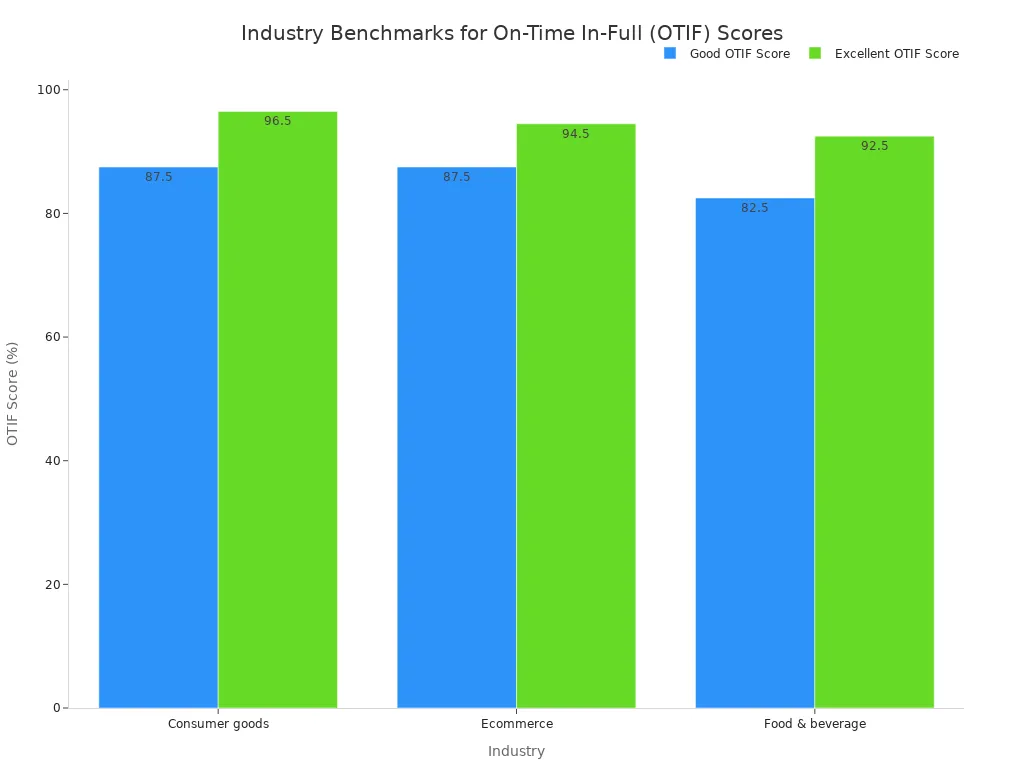
| Industry | Good OTIF score | Excellent OTIF score |
|---|---|---|
| Consumer goods | 85-90% | 95-98% |
| Ecommerce | 85-90% | 92-97% |
| Food & beverage | 80-85% | 90-95% |
Order Fill Rate
This metric tracks the percentage of an order that a supplier successfully ships. While similar to OTIF, it focuses specifically on the quantity fulfilled, not the timing. A high fill rate (typically 95% or more) shows your partner can consistently meet your inventory demands.
Order Cycle Time
Order cycle time measures the total duration from when you place an order to when you receive it. A shorter cycle time gives you more agility. It allows you to respond faster to sales trends and reduce the need for large safety stock.
Inventory Performance Metrics
These KPIs help you evaluate how efficiently you and your partners are managing inventory.
Inventory Turnover Rate
This ratio shows how many times you sell and replace your inventory over a specific period. A higher turnover is generally better, but the ideal rate varies significantly by industry. This data helps you optimize stock levels.
| Industry | Inventory Turnover Ratio |
|---|---|
| Supermarkets | 15 |
| Baked goods | 69.5 |
| Fashion & Apparel | 8-12 |
Sell-Through Rate
The sell-through rate tells you what percentage of your received inventory you have sold. You can calculate it with a simple formula: (Units Sold / Units Received) x 100. A healthy rate, often between 70-80%, indicates strong demand and effective inventory planning.
Stockout Frequency
This metric tracks how often a specific item goes out of stock. Frequent stockouts signal problems in forecasting or replenishment. This collaboration metric directly impacts the customer experience and your bottom line.
Sales and Commercial Metrics
These metrics measure the financial success of your joint efforts.
Promotional Uplift
Promotional uplift quantifies the increase in sales generated by a marketing campaign. You calculate it by comparing sales during the promotion to a baseline period. The formula is:
Promotional Uplift = (Sales During Promotion - Baseline Sales) / Baseline Sales * 100
This shows the direct ROI of your joint marketing investment.
Point-of-Sale (POS) Data Trends
Analyzing shared POS data helps you and your partners identify emerging sales patterns, popular product combinations, and regional preferences. This insight is invaluable for refining your joint strategy.
Category Margin Performance
This metric tracks the profitability of an entire product category. It helps you and your supplier assess whether your partnership is driving profitable growth. Consistent monitoring ensures the collaboration remains financially beneficial for both sides.
Compliance and Agreement Metrics
These metrics ensure that the strategic agreements you make with partners are honored where it matters most: in the store. They provide the data you need to hold each other accountable and protect the integrity of your brand and promotions. This level of tracking transforms your partnership from a handshake deal into a transparent, results-driven collaboration.
In-Store Execution Compliance
A brilliant marketing plan fails if it is not implemented correctly on the shelf. In-store execution compliance measures how well your shared vision translates into the physical retail environment. It confirms that customers see the right products, in the right place, with the right messaging. This ensures your investment in planning and logistics delivers its intended impact.
To effectively monitor execution, you and your partners should focus on several key areas:
- Product Positioning and Presence: This includes tracking SKU availability, the number of facings per product, and correct shelf location to ensure your products are visible and available.
- Planogram Compliance Rate: This metric verifies that products are placed according to the agreed-upon layout, which is essential for optimizing the shopping experience.
- Share of Shelf: You can measure your brand's physical space on the shelf compared to competitors. This helps you assess your brand's prominence in a category.
- Promotion Execution: This involves checking that point-of-sale materials are correctly placed, displays are active, and promotional signage is accurate.
Pricing Agreement Adherence
Incorrect pricing can instantly damage customer trust and derail a promotional campaign. Adherence metrics confirm that the prices on the shelf match your agreements, protecting both your customers and your profit margins. A strong vendor collaboration depends on this fundamental accuracy.
When a customer sees a price on the shelf that differs from the price at checkout, it creates frustration and erodes their confidence in both your store and the brand.
You must track pricing compliance with precision. Key metrics include:
- Price-Tag Accuracy: Regularly verify that the price displayed on the shelf tag is correct and present for every product.
- Discount Integrity: During promotions, you need to confirm that all agreed-upon discounts, like BOGOs or percentage-off deals, are reflected accurately at the shelf and in the POS system.
- Issue Resolution Time: Measure how quickly your teams can fix pricing errors once they are identified. A fast resolution time minimizes negative customer impact.
The Tangible Benefits of Effective Tracking
When you implement a robust tracking system, the benefits extend far beyond simple data collection. This strategic approach creates tangible value for both you and your partners, strengthening your entire retail ecosystem. It transforms your partnerships into powerful engines for growth and efficiency.
For Retailers
Higher Inventory Turns
Effective collaboration gives you the insight to stock smarter, not just bigger. By aligning your inventory with real-time demand data from your partners, you can optimize stock levels. This means you sell through products more quickly, freeing up capital and shelf space for new opportunities.
Increased Customer Loyalty
A reliable shopping experience is the foundation of customer loyalty. When you and your suppliers work together to prevent stockouts, you ensure products are always on the shelf for your shoppers. This consistency builds trust and makes your store the preferred destination, keeping customers from turning to competitors.
Lower Operational Costs
A synchronized supply chain is an efficient one. This improved collaboration directly reduces your operational expenses by minimizing waste and streamlining logistics. Studies show that a data-driven approach yields significant savings.
- Companies using AI-powered supplier collaboration systems report supply chain cost reductions of up to 20%.
- Case studies involving retailers like Tesco and Promodes estimate that operational collaboration can generate savings of 1.5% to 2.5% of total retail sales.
- This efficiency shrinks logistics costs and reduces the labor needed to manage exceptions.
For Suppliers and Brands
Better Production Planning
When you share sales forecasts and POS data, you empower your suppliers to plan with precision. Instead of reacting to large, infrequent orders, they can see demand as it happens. This visibility allows them to align their production schedules with your actual needs, reducing the bullwhip effect and optimizing their own raw material inventory.
Reduced Chargebacks and Penalties
Chargebacks for issues like late shipments or incorrect labeling can be a major financial drain. A strong tracking collaboration minimizes these errors by creating a shared, transparent process. This alignment helps you avoid costly penalties and protects your revenue.
Did You Know? Up to 15% of a manufacturer's invoices can face chargeback deductions, costing them 2% to 10% of their total revenue.
| Penalty Type | Common Cost |
|---|---|
| Late/Missing Deliveries | 3% of order value |
| Flat Fee Per Shipment | $50 - $100 |
| Per-Label Error | $7 |
Improved Brand Presence on the Shelf
Ultimately, your shared goal is to win over the customer at the shelf. Effective tracking ensures that promotions are executed flawlessly and products are consistently available. This reliability enhances the brand's image in the eyes of the consumer, strengthens its position against competitors, and builds a foundation for long-term growth.
Common Challenges in Collaboration and How to Overcome Them
While the benefits are clear, building an effective tracking collaboration is not without its hurdles. You will likely face technical, relational, and cultural challenges. Understanding these common obstacles is the first step toward overcoming them and creating a truly successful partnership.
Data Silos and Incompatibility
Fragmented data is a primary barrier to effective collaboration. This issue is not just an IT inconvenience; it inflates costs and eats into your revenue. Many retail businesses struggle with this problem.
- 34% of retailers cite a 'Lack of integration across systems' as a major challenge.
- 19% identify 'fragmented customer data' as a significant issue.
Adopting Integrated Platforms
You can break down these walls by adopting an integrated platform. These systems act as a central hub, pulling information from different sources into one shared space. This gives you and your partners a single source of truth, eliminating confusion and ensuring everyone works with the same data.
Standardizing Data Formats
An integrated platform is only effective if the information is usable. You must work with your partners to standardize data formats. This means agreeing on common definitions and structures for everything from sales figures to inventory codes. Standardization ensures that the data you share is clean, consistent, and easily understood by all parties.
Lack of Trust Between Partners
Technology alone cannot create a partnership; trust is the human element that makes it work. Without a foundation of trust, partners are often hesitant to share sensitive information, which undermines the entire effort.
Eli Sofer, a corporate finance leader, emphasizes that supply chains rely on authenticity and transparency. He states, “We have to be transparent and able to collaborate with them, particularly when either the supplier or purchaser faces difficulties.”
Starting with Small, Shared Goals
You can build trust incrementally. Instead of launching a massive, complex initiative, start with a small, well-defined pilot project. Choose a goal with clear, mutual benefits, such as improving the sell-through rate for a single product line. Achieving a small win together builds confidence and demonstrates the value of the partnership.
Establishing Clear Partnership Agreements
Formalize your collaboration with clear agreements. These documents should outline roles, responsibilities, performance metrics, and data-sharing protocols. It is also critical to address security. You must use secure platforms to protect against fraud, which can instantly destroy a relationship and lead to a complete breakdown in trust.
Resistance to Change
Often, the biggest challenge comes from within your own organization. Employees may resist new tools and processes, especially if they feel the changes are forced upon them. Poor communication and insufficient training are major drivers of this resistance.
Demonstrating Value with Pilot Programs
A pilot program is an excellent tool for winning over internal teams. By demonstrating the benefits of the new system on a small scale, you create internal champions. When other employees see how the new process reduces manual work or prevents stockouts, they become more open to adopting it themselves.
Providing Training and Ongoing Support
You must invest in comprehensive training. Studies show that around 67% of employees identify insufficient training as a key reason for resisting new technology. Go beyond a one-time session. Offer ongoing support, create easy-to-access resources, and provide a forum for feedback to ensure your teams feel confident and empowered.
Essential Tools and Technologies for Collaboration Tracking
To build a successful partnership, you need the right tools. Technology provides the framework for sharing information, automating processes, and analyzing performance. These systems turn your collaboration goals into a functional reality, creating a more efficient and transparent retail ecosystem.
Supplier and Vendor Portals
Supplier portals are dedicated online platforms that give you and your partners a single, shared space to work. They are the digital headquarters for your vendor collaboration.
Centralized Communication Hubs
These portals act as a centralized hub for all communication. You can manage orders, share updates, and resolve issues in one place. This eliminates scattered email chains and phone calls, ensuring everyone has access to the same information.
Secure Document and Data Sharing
Portals provide a secure environment for sharing sensitive documents like contracts and performance data. You can control access with user-specific permissions, protecting your information. Many software solutions cater to different business needs.
| Software | Best For | Key Features |
|---|---|---|
| Knack | SMBs needing a no-code portal | Drag-and-drop interface, workflow automation |
| Kissflow | Smaller businesses seeking a low-code solution | Requisition automation, invoice matching |
| Gatekeeper | Mid-to-large enterprises needing contract management | AI-powered data extraction, approval chains |
Electronic Data Interchange (EDI)
Electronic Data Interchange (EDI) is a technology that lets computer systems exchange business documents directly. It removes manual data entry, which reduces errors and speeds up your entire supply chain.
Automating Purchase Orders and Invoices
EDI automates the flow of routine documents. For example, your system can automatically send an EDI 850 (Purchase Order) to a supplier. The supplier's system then processes it and can return an EDI 810 (Invoice) without human intervention.
The EDI process is fully automated. It involves no paper and no people, leading to faster results and fewer mistakes.
Standardizing Business Documents
EDI works because it uses standardized formats. These standards, like ANSI X12 or EDIFACT, define how information is structured in a document. This ensures your system and your partner's system can understand the data. The process is simple:
- Your system prepares a document.
- It translates the document into an EDI standard.
- The file is sent securely to your partner.
- Your partner's system receives and translates the file.
- The data is processed automatically.
Collaborative Planning, Forecasting, and Replenishment (CPFR) Software
CPFR software is a specialized supply chain management platform designed for deep collaboration. It helps you and your partners work together on forecasting and inventory planning.
Facilitating Joint Business Planning
These tools provide a shared space to establish mutual goals. You can align on promotional strategies, new product launches, and overall business objectives. This ensures your joint efforts are coordinated from the start.
Aligning Demand and Supply Forecasts
CPFR software excels at aligning your forecasts. It enables real-time data sharing so you can jointly manage demand and supply. Key functions include:
- Joint Business Planning: Set mutual goals for the partnership.
- Demand and Supply Management: Exchange forecast data and inventory levels continuously.
- Execution: Manage order fulfillment and replenishment together.
- Analysis: Monitor outcomes to find areas for improvement.
This level of collaboration makes your entire operation more responsive to customer needs.
Retail Analytics Platforms
Retail analytics platforms are powerful tools that transform raw numbers into actionable insights. They are the engines that power your vendor collaboration, giving you and your partners a clear, visual understanding of your shared performance. These systems make complex information accessible and easy to act on.
Providing Real-Time Data Visualization
Real-time data visualization brings your metrics to life. Instead of waiting for weekly or monthly reports, you can see sales, inventory levels, and customer behavior as they happen. This immediate access allows you to respond quickly to market changes and identify emerging trends. Effective platforms provide instant reporting, which is essential for a dynamic retail environment.
This practice of real-time data sharing enables your teams to make swift, informed decisions. You can spot a sudden sales spike for a promotional item and alert your supplier to ramp up production before a stockout occurs.
This capability turns your collaboration from a reactive process into a proactive strategy. You and your partners can address challenges and seize opportunities together, all based on live information.
Creating Custom Performance Dashboards
Custom dashboards are your command center for tracking success. These tools allow you to build personalized views that focus on the key performance indicators (KPIs) that matter most to your partnership. You can create dashboards that track everything from promotional uplift to on-shelf availability, giving every stakeholder a clear view of progress.
Many excellent platforms offer these capabilities.
- Tableau and Looker are leading solutions that provide powerful data visualization and sales trend tracking.
- Microsoft Power BI integrates next-generation AI tools for deeper analysis and real-time analytics.
- Geckoboard is a great choice for teams that need simple, beautiful dashboards for monitoring key metrics live on office TVs or mobile devices.
These platforms consolidate information from various sources into a single, easy-to-understand interface. This ensures you and your partners are always working from the same data, which builds trust and drives mutual accountability.
Retail collaboration tracking is a critical strategy for monitoring joint efforts. You drive mutual success with your partners through this collaboration. Focusing on shared data and key metrics directly improves efficiency. This transparent data strengthens your partnerships and increases profitability. Adopting the right tools and mindset helps you build a more resilient retail operation with better data.
FAQ
What is the first step to start tracking collaboration?
You start by defining shared goals with a partner. Agree on a few key metrics (KPIs) to measure success. This alignment creates a strong foundation for your partnership and ensures you both work toward the same objectives.
How does collaboration tracking help small retailers?
It helps you compete with larger chains. You can improve inventory management, reduce stockouts, and build stronger supplier relationships. This efficiency allows you to operate more effectively, even with limited resources, driving growth and customer satisfaction.
What is the biggest benefit of retail collaboration tracking?
The primary benefit is increased efficiency across your supply chain. This leads to fewer stockouts, lower costs, and higher sales. Ultimately, it strengthens your partnerships and improves the customer experience, which drives long-term growth for your business.
Is special software always necessary for tracking?
Not always for simple collaborations. You can start with shared spreadsheets. However, specialized software like supplier portals or analytics platforms automates processes and provides real-time data. These tools make tracking much more efficient as your partnership grows.
How do you choose the right KPIs for your partnership?
You should select KPIs that directly measure your shared goals. Focus on metrics that reflect mutual success, such as On-Time In-Full (OTIF), sell-through rate, and promotional uplift. Keep the list focused to ensure clarity and accountability.
How long does it take to see results from collaboration?
You can see initial results, like improved communication, quickly. More significant benefits, such as lower inventory costs or higher sales, may take a few months. The timeline depends on the complexity of your goals and the tools you implement.