Solving The Product Availability Puzzle For 2026
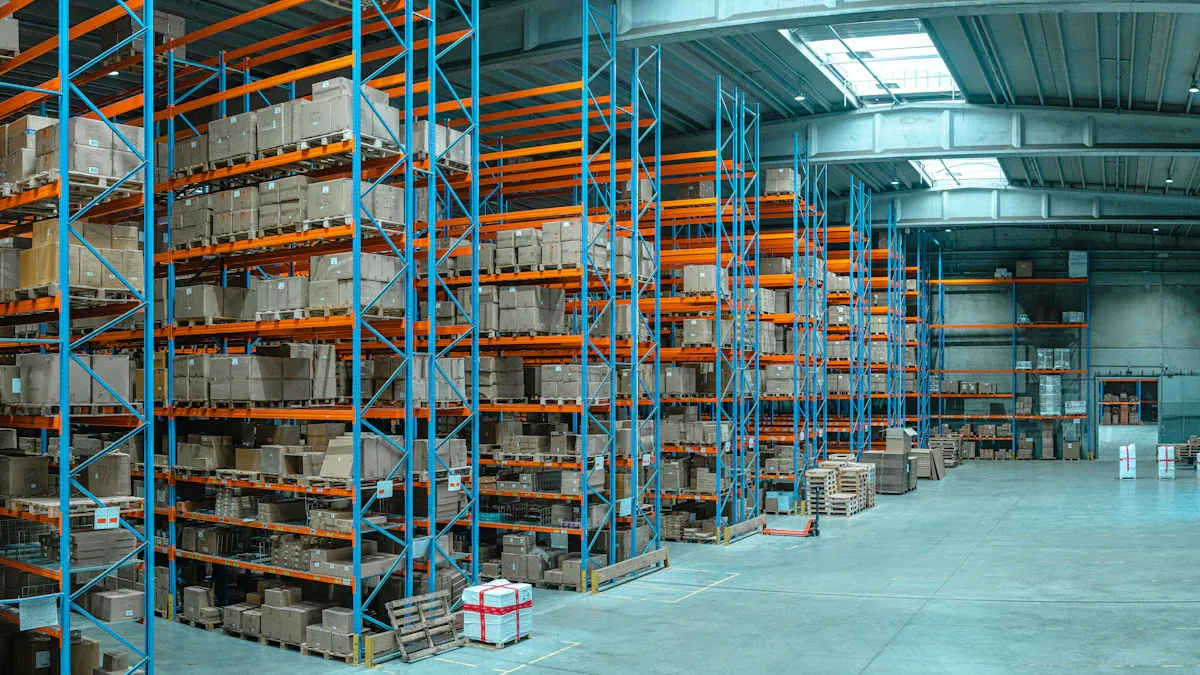
Product availability is the state of having a product ready for a customer at the exact moment of purchase. By 2026, its importance is magnified. A majority of online shoppers, over 56%, now consider immediate shipment critical. In-store, Esl Retail solutions that use an ESL Gateway AP to update each ESL Price Tag can signal real-time stock on Electronic Shelf Labels, satisfying this demand.
In an era of volatile supply chains and high expectations, ensuring product availability is a critical factor for protecting revenue and building brand loyalty.
Why Product Availability is a Non-Negotiable for 2026
In the competitive landscape of 2026, product availability transcends simple inventory management. It has become a foundational pillar for customer satisfaction, revenue protection, and brand integrity. Businesses that fail to meet this core expectation risk more than just a single sale; they risk their long-term viability.
Meeting the 'Always-On' Customer Expectation
The New Standard of Immediacy
Today's consumer operates in a state of perpetual shopping. The line between browsing and buying has vanished. This "always-on" behavior means every digital interaction is a potential transaction.
- Nearly seven in 10 shoppers (69%) now make purchases while multitasking.
- This trend is especially strong among Millennials (76%) and men (75%).
- Shopping is no longer a dedicated event. It is a continuous background process.
Customers expect products to be available the moment they decide to buy. A delay of even a few hours can feel like a significant failure.
The High Cost of a Single Stockout
An empty shelf, whether physical or digital, is a major liability. The Harvard Business Review found that retailers lose nearly half of all intended purchases when an item is unavailable. Up to 20% of all online cart abandonments are directly caused by stockouts. The financial damage is immense, with research indicating that these lost opportunities contribute to over $1.2 trillion in lost sales for retailers each year.
Protecting Revenue in a Volatile Market
Preventing Direct Sales Loss
Every stockout represents a direct hit to your bottom line. When a customer cannot find what they want, they will likely go to a competitor. Beyond the immediate lost sale, there are intangible costs. A poor reputation for availability can diminish brand perception, costing some product lines as much as 5% of their revenue. Consistent availability is a direct defense against this erosion of profit.
Safeguarding Against Supply Chain Shocks
The modern supply chain is fragile. A single event can trigger massive disruptions.
A McKinsey report warns that companies can expect to lose an average of 45% of one year's profit each decade due to supply chain issues.
Events like the COVID-19 pandemic and the Suez Canal obstruction demonstrated this vulnerability. These shocks caused widespread production halts and stockouts across industries, from automotive to healthcare. Economist Impact notes that such slowdowns can cost a company 6-10% of its annual revenue, making a resilient supply strategy essential for financial stability.
Building Unshakeable Brand Trust
Reliability as a Key Differentiator
In a market saturated with options, reliability becomes a powerful differentiator. Customers remember the brands that consistently have what they need. This dependability builds a deep sense of trust. When a customer knows they can count on you, they are less likely to even consider a competitor. Your brand becomes synonymous with reliability, creating a competitive moat that is difficult for others to cross.
Boosting Customer Lifetime Value
Trust directly translates to loyalty and higher Customer Lifetime Value (CLV). Strategies like the 'endless aisle'—which ensure a customer can always order an item even if it's not physically in-store—prevent lost sales and enhance the shopping experience. A satisfied customer who trusts your brand to deliver will return again and again. This cycle of satisfaction and repeat business is the key to maximizing long-term profitability from each customer relationship.
Top Challenges to Maintaining Product Availability

Achieving consistent product availability in 2026 requires navigating a landscape of unprecedented complexity. Businesses face external shocks from global events and internal hurdles from outdated systems. Understanding these challenges is the first step toward building a resilient strategy.
Navigating Supply Chain Complexity
Geopolitical and Climate Disruptions
Global supply chains are increasingly vulnerable to external shocks. Geopolitical fragmentation is now a top-tier risk. Governments are using new trade policies, tariffs, and export controls to protect national interests. This creates an unpredictable environment for businesses. Key risks include:
- State Interventionism: Governments use subsidies and local investment mandates to secure their economies.
- Trade Under Pressure: Shifting tariffs and export controls on critical minerals disrupt established trade patterns.
- Armed Conflict: Regional disputes can sever access to raw materials and clog logistics routes.
Simultaneously, climate change introduces another layer of volatility. The World Economic Forum ranks extreme weather as a top global risk. Andrew Forsyth of Zurich Resilience Solutions notes, "Climate change doesn't respect borders," meaning a drought or flood in one region can trigger delays worldwide.
The Rise of Complex Global Sourcing
Companies once pursued global sourcing for cost advantages. Now, this strategy introduces significant complexity. Managing a network of international suppliers means navigating a maze of regulations and potential disruptions. Tariff structures have become more intricate. For example, some semiconductors are now taxed based on their Country of Design, not their Country of Origin. This constant policy flux makes long-term planning difficult and exposes businesses to sudden cost increases.
The Problem of Inaccurate Demand Forecasting
The Influence of Viral Social Media Trends
Social media platforms like TikTok can create demand overnight, making traditional forecasting models obsolete. A single viral video can exhaust a product's annual sales forecast in weeks.
A viral recipe led to a nationwide shortage of feta cheese. A sponsored TikTok review caused Elf's Halo Glow Liquid Filter to sell out in just three days.
These sudden spikes are nearly impossible to predict. They leave businesses scrambling to replenish stock, often long after the trend has peaked.
The Impact of AI-Driven Consumerism
AI algorithms now power personalized shopping experiences. They recommend products to consumers with incredible precision. This creates hyper-focused demand patterns that are difficult to anticipate at a macro level. While AI helps the consumer find products, it also creates new challenges for supply chain managers who must predict the cumulative effect of millions of individualized recommendations.
Overcoming Fragmented Inventory Visibility
The Persistent Issue of Data Silos
Many organizations still operate with disconnected systems. The sales team has its data. The warehouse has another set. The marketing department has its own. These data silos prevent a unified view of the business. This fragmentation leads to significant operational waste.
- Duplication of Effort: Teams perform redundant tasks without shared insights.
- Increased Costs: Companies pay for multiple tools and services to manage siloed data.
- Repetitive Manual Work: Staff waste time manually transferring data between systems, a tedious and error-prone process.
The Lack of a Single Source of Truth
Without a central, unified data source, a business cannot have a single source of truth. Different departments may work from conflicting inventory numbers. This leads to poor decision-making, from incorrect replenishment orders to inaccurate promises made to customers. Reconciling these data discrepancies is a hidden cost that drains resources and undermines efforts to maintain reliable inventory levels.
Strategy 1: Build a Foundation with Unified Commerce
Fragmented systems are the primary obstacle to solving the availability puzzle. A unified commerce strategy dismantles these barriers. It creates a single, cohesive ecosystem for all your sales and inventory operations. This foundation is essential for meeting the demands of 2026.
Adopt a Unified Commerce Platform
A unified commerce platform is not just another piece of software. It is a fundamental shift in how a business operates. It moves away from multichannel or omnichannel models that stitch separate systems together. Instead, it provides one native platform for all commerce functions.
Integrating All Sales Channels
A unified platform breaks down the walls between your physical stores, e-commerce site, and mobile app. It connects every point of sale into a single, intelligent network. This integration delivers immediate benefits for product availability.
- Hollywood Feed, a pet retailer with over 170 stores, uses unified commerce to ensure a seamless experience across all its channels.
- Department store Renys modernized its operations with a unified platform. This change doubled checkout speed and reduced special order fulfillment from ten days to just a few.
- The Natural Dog saved over 11,000 hours annually after implementation, enabling a tenfold increase in Buy Online/Pickup In-Store (BOPIS) sales.
These successes show that integration directly improves customer access to products.
Achieving a Single View of Inventory
Integration creates the ultimate goal: a single, real-time view of all inventory. Every stakeholder, from the warehouse floor to the marketing team, works from the same data.
A unified platform establishes one database for everything. It provides a single source of truth for all sales, inventory, and customer data.
This eliminates guesswork and data conflicts. Glassmaker Simon Pearce used this approach to gain clear inventory visibility and reduce order processing times. This single view ensures that when an item sells in one channel, inventory levels update instantly across all others, preventing stockouts and lost sales.
Implement Advanced Inventory Tactics
With a unified data foundation in place, you can execute more sophisticated inventory management strategies. These tactics move beyond basic replenishment to a proactive and intelligent model of stock control.
Calculating Dynamic Safety Stock
Static safety stock levels are no longer sufficient. Dynamic safety stock is a fluid approach that adjusts your inventory buffer in real time based on current conditions. This method accounts for key variables:
- Demand Variability: It analyzes demand signals to anticipate fluctuations.
- Lead Time Uncertainty: It continuously monitors supplier performance and supply chain disruptions.
- Service Level Objectives: It prioritizes availability for items based on their profitability and customer expectations.
AI and machine learning models are crucial here. They automate these complex calculations, ensuring you hold the optimal amount of stock without risking stockouts or incurring excessive carrying costs.
Using ABC Analysis for Prioritization
ABC analysis is a powerful technique for inventory segmentation. It helps you focus your resources where they matter most by categorizing products based on their value to the business.
- Category A: High-value products that contribute the most to revenue. These require tight control and frequent monitoring.
- Category B: Moderate-value products with less frequent monitoring.
- Category C: Low-value products that make up the bulk of inventory items. These require the least amount of oversight.
By applying this analysis, you can tailor your inventory policies for each category. This ensures your most critical "A" products are protected from stockouts, directly safeguarding your revenue and brand reputation.
Strategy 2: Enhance Product Availability with AI

A unified commerce foundation prepares your business for the next evolution: artificial intelligence. AI transforms inventory management from a reactive process into a predictive, automated discipline. It provides the intelligence needed to place the right products in the right location before the customer even knows they want them.
Implement AI-Powered Demand Forecasting
Traditional forecasting methods struggle with modern market volatility. AI-powered systems overcome these limitations by processing information on a scale and at a speed that is humanly impossible.
Analyzing Vast Datasets for Accuracy
AI algorithms analyze immense and diverse datasets to generate highly accurate demand predictions. These systems process historical sales data, current market trends, competitor pricing, and even macroeconomic indicators. The result is a significant leap in precision. McKinsey research shows that AI-driven forecasting can reduce errors by 20-50% compared to traditional approaches. This accuracy allows businesses to align inventory with true demand, minimizing both overstock and understock scenarios.
Automating Replenishment Orders
Superior forecasting is most powerful when paired with automation. AI can translate demand predictions directly into optimized replenishment orders, eliminating manual work and potential delays. This creates a self-regulating inventory system.
- Amazon uses AI for "anticipatory shipping," predicting customer purchases to pre-position stock and reduce delivery times.
- Walmart implemented an AI-powered system for automated stock replenishment, leading to major reductions in inventory holding costs and fewer stockouts.
These automated workflows ensure that inventory flows smoothly through the supply chain, responding instantly to shifts in consumer behavior.
Use AI to Optimize Stock Placement
Knowing what will sell is only half the battle. You also need to know where it will sell. AI excels at optimizing inventory distribution across your entire fulfillment network, from large distribution centers to individual retail stores.
Predicting Regional Demand Hotspots
AI systems can identify emerging regional demand hotspots by analyzing external factors that influence local buying behavior. The technology connects seemingly unrelated data points to forecast localized surges. For example, an AI model can:
- Analyze weather forecasts to increase stock of cold beverages in a region expecting a heatwave.
- Monitor social media buzz around a major sports tournament to predict demand for team merchandise near event venues.
This predictive capability allows you to proactively position inventory, ensuring high product availability precisely where it will be needed most.
Optimizing Stock Levels Across Locations
By predicting regional demand, AI helps you maintain optimal stock levels at every node in your network. This prevents situations where one warehouse is overstocked while another faces a shortage of the same item. The system balances inventory dynamically, reducing carrying costs and the need for expensive stock transfers. This strategic placement directly translates to lower operational expenses and faster fulfillment.
| Company | AI-driven System | Impact on Costs |
|---|---|---|
| Amazon | Predictive inventory system | 12% reduction in inventory holding costs. |
| Walmart | AI forecasting models | 10-15% reduction in inventory costs. |
Ultimately, AI-driven stock placement ensures products are closer to the end customer, cutting shipping times and improving the overall customer experience.
Strategy 3: Create a Resilient Fulfillment Network
Technology and data provide the intelligence for product availability. A resilient fulfillment network provides the physical means to deliver on that promise. Building this network requires diversifying your supply sources and automating your fulfillment operations to withstand future shocks.
Diversify Your Supply Chain
Over-reliance on a single region or supplier is a critical vulnerability. A diversified supply chain spreads risk and creates a more robust operational backbone.
Reducing Single-Supplier Dependency
Relying on one supplier creates a single point of failure. Diversification is a powerful strategy to mitigate this risk. It involves building a portfolio of suppliers across different geographies. This approach offers several key advantages:
- It enhances supply chain resilience during disruptions.
- It ensures continuity of supply when one partner faces challenges.
- It introduces innovative solutions and alternatives when traditional suppliers fail.
By spreading your sourcing, you create a safety net that protects your business from localized events, ensuring you can maintain product availability even when one part of your network is down.
Embracing Nearshoring and Onshoring
Bringing production closer to home is a major trend for building resilience. Nearshoring (moving production to a nearby country) and onshoring (moving it domestically) shorten supply lines and reduce geopolitical risk. A 2025 survey found that nearly half of manufacturers reshoring to the U.S. did so to be closer to engineering teams or to lower freight costs. Another 38% aimed to avoid geopolitical instability.
This shift is creating new economic opportunities. Latin American economies like Mexico, Brazil, and Colombia are projected to gain an additional $29 billion annually in exports from nearshoring. In the U.S., the electric vehicle (EV) sector is booming, with $52 billion in new supply chain investments announced in North America.
Leverage Warehouse and Fulfillment Automation
A resilient network must also be fast and accurate. Warehouse automation and robotics are essential for meeting modern fulfillment demands. They transform warehouses from manual operations into highly efficient, technology-driven hubs.
The Role of Robotics in Order Picking
Robotics directly addresses the most labor-intensive part of fulfillment: order picking. Autonomous Mobile Robots (AMRs) and collaborative robots (cobots) work alongside human employees to increase efficiency and accuracy. These systems deliver a significant return on investment.
A 70% improvement in picking efficiency can reduce a 25-person workforce to just 14, saving approximately $445,000 in annual labor costs.
Robots follow programmed instructions with over 99.9% consistency. This precision dramatically reduces mis-picks, which can cost a company with one million annual orders up to $250,000 for every 0.5% error rate.
Accelerating Order Processing and Shipping
Automation accelerates the entire fulfillment lifecycle, from receiving to shipping. Automated systems streamline operations and minimize manual touchpoints, leading to faster and more reliable order processing.
- Speed: Automated picking and packing systems can increase throughput by up to 3x compared to manual methods.
- Accuracy: AI-powered vision systems verify order contents, while automated document recognition eliminates data entry errors, pushing accuracy rates above 99.9%.
- Efficiency: AI algorithms optimize everything from warehouse travel paths to packaging configurations, reducing waste and accelerating workflows.
By integrating automation, businesses can process orders faster, reduce errors, and ensure products get to customers without delay. This speed and reliability are cornerstones of a modern, resilient fulfillment strategy.
Mastering product availability is no longer an operational task; it is a core strategic advantage for 2026. Businesses that solve this puzzle secure lasting customer loyalty.
By integrating advanced technology like AI and building resilient systems, you can achieve unified inventory visibility and uncover micro-trends before they peak.
Start implementing these strategies today. Taking critical first steps, from market assessment to aligning with quality service providers, ensures your products are exactly where customers need them to be in 2026 and beyond.
FAQ
What is the first step to improve product availability?
The first step is to break down data silos. Adopt a unified commerce platform to create a single source of truth for all inventory, sales, and customer data. This foundation enables all other advanced strategies and provides immediate visibility across your entire operation.
How does AI improve demand forecasting?
AI analyzes vast datasets, including historical sales, market trends, and even weather patterns. This allows it to identify complex patterns and predict future demand with much higher accuracy than traditional methods. This reduces forecasting errors and minimizes stockouts or overstock situations.
Why is a single stockout so damaging?
A single stockout leads to immediate lost sales. It also damages brand trust and can push customers to your competitors permanently. Research shows retailers lose nearly half of intended purchases when an item is unavailable, highlighting the significant financial and reputational cost.
What is a unified commerce platform?
A unified commerce platform integrates all sales channels (e-commerce, physical stores, mobile) into a single, native system. It provides one real-time view of inventory and customer data, eliminating the need to sync separate systems and creating a seamless customer experience.
How does supply chain diversification build resilience?
Diversification reduces your reliance on a single supplier or geographic region. By using multiple suppliers and embracing nearshoring, your business can better withstand localized disruptions like political instability or natural disasters. This ensures a more stable supply of products.
What is dynamic safety stock?
Dynamic safety stock is an intelligent inventory buffer that adjusts automatically. Unlike a fixed number, it uses AI to account for real-time demand variability and lead time uncertainty. This optimizes inventory levels, preventing stockouts without causing costly overstock.
Can small businesses apply these strategies?
Yes. Many strategies are scalable. Small businesses can start with:
- Implementing an affordable unified commerce system.
- Using ABC analysis to prioritize key products.
- Gradually diversifying with local or regional suppliers.
The key is to build a foundation for growth.